Reduce heat
Improve interior comfort and reduce solar load without automatically making the glass dark or reflective.
LOS CABOS · CABO SAN LUCAS · SAN JOSÉ DEL CABO
Heat and glare control, UV protection and options for privacy and safety, selected for your glass, light and view.
On-site assessments by appointment · English / Español
Checking local weather…
The invisible layer
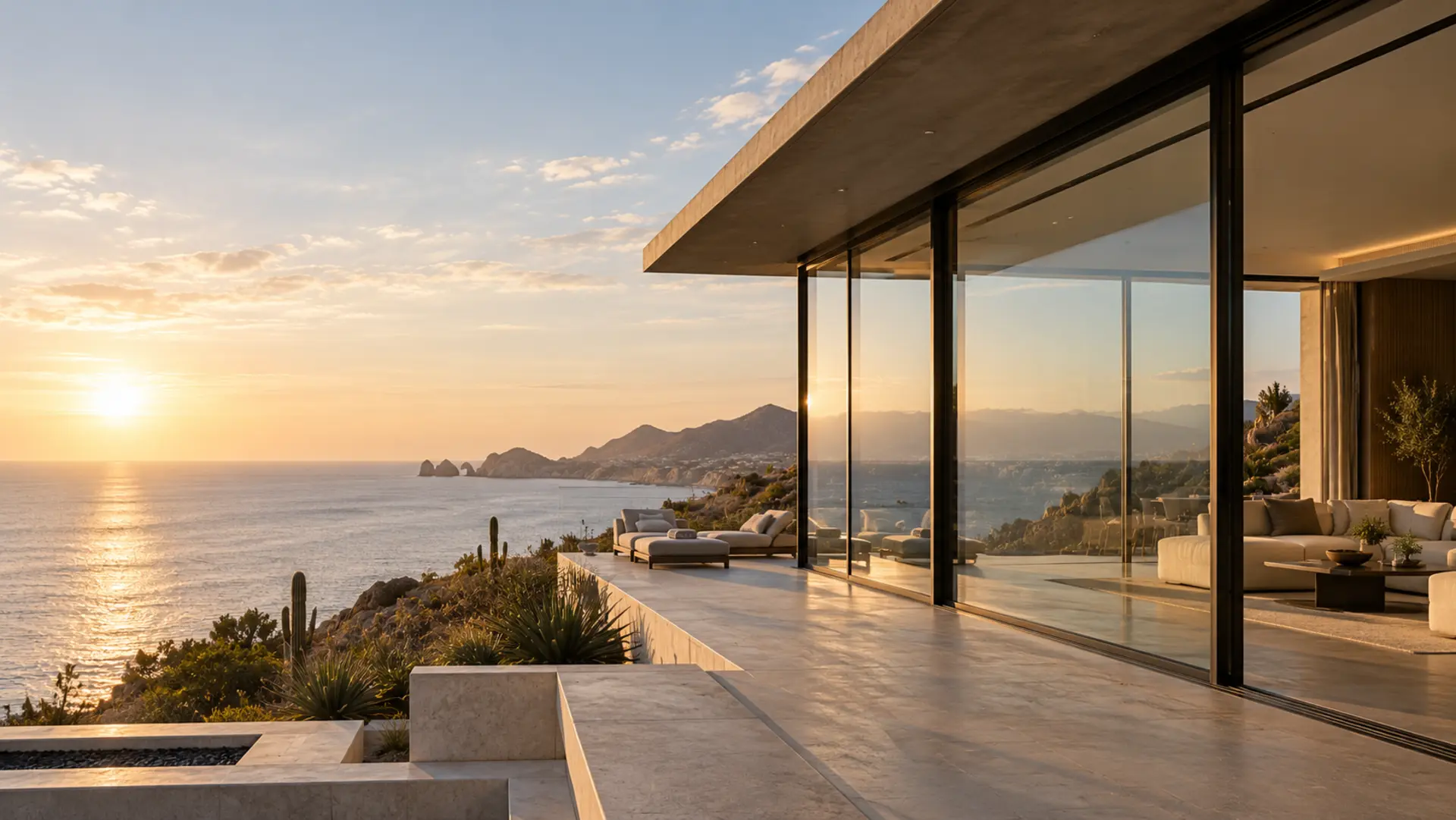
Coastal light, heat and salt exposure demand more than a one-film-fits-all recommendation. We evaluate the environment first, then specify the right balance of performance and appearance.
Improve interior comfort and reduce solar load without automatically making the glass dark or reflective.
Make west-facing rooms, workspaces and helm areas more usable through intense afternoon light.
Help reduce UV exposure and fading across furnishings, finishes, artwork and marine interiors.
Consider daytime privacy, decorative films or safety films that help hold broken glass together. Safety performance depends on the specified film, glass and attachment system; it is not a hurricane or blast guarantee.
Solutions
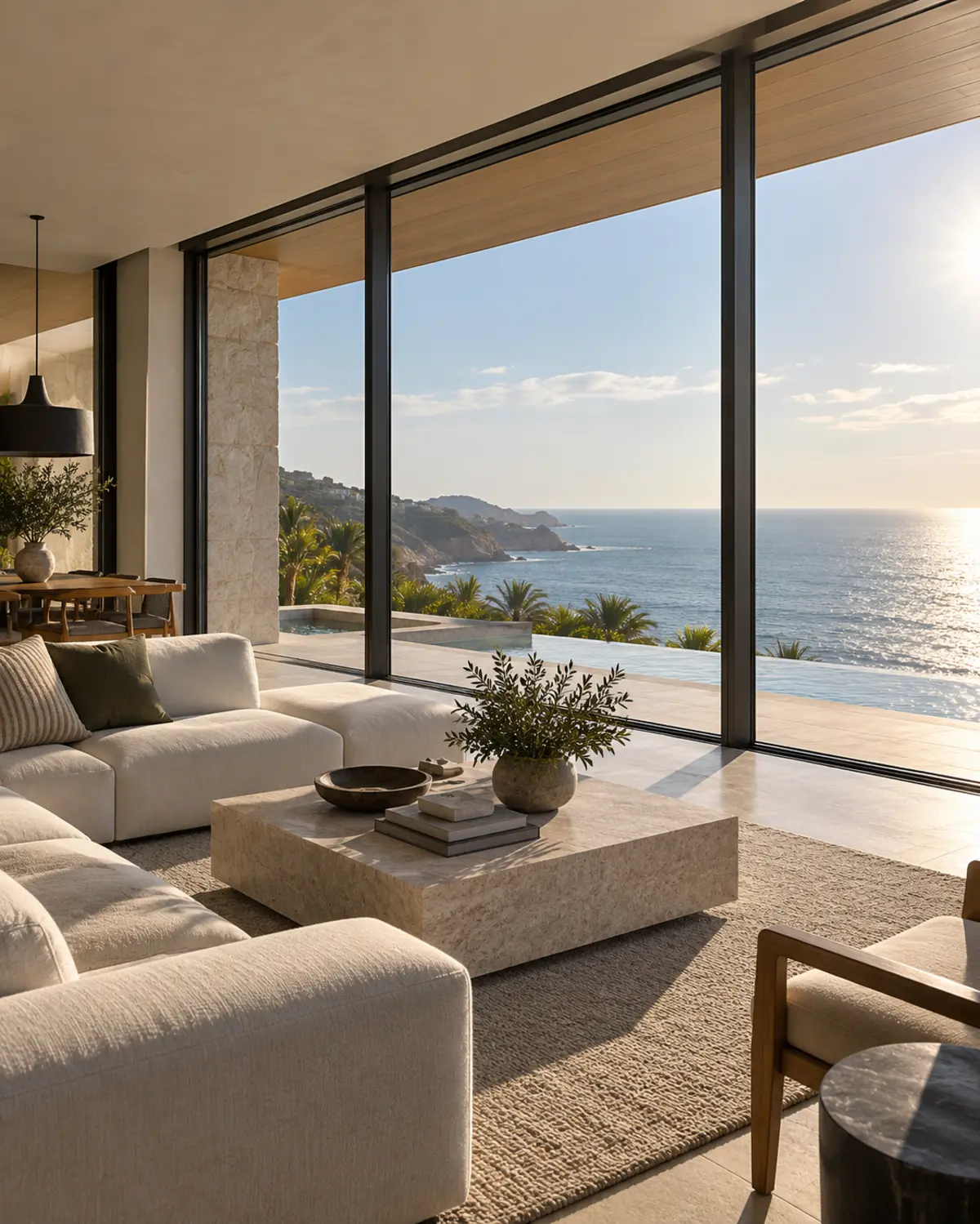
Solar-control window films, including ceramic options, selected for your glass, comfort and view.
Villas · condos · homes
Heat rejection, glare reduction, UV protection, daytime privacy and clear safety films for high-value interiors.
Hospitality · offices · retail
Performance-led film packages for guest comfort, visual consistency, operational needs and solar control.
Yachts · sportfishing · commercial vessels
Film options selected for demanding marine environments, preserving visibility while improving comfort and protection.
Professional-grade options from established global manufacturers, including 3M, LLumar and XPEL Marine, are specified only where they suit the project.

Premium yacht window film
Comfort, visibility and interior protection for yachts throughout Latin America.
Explore marine solutionsHow it works
Share the location, glass, exposure and the problem you want to solve.
We review glass type, orientation, access, aesthetics and performance priorities.
You receive a clear film recommendation, scope and price for approval.
We coordinate the work around the property or vessel and confirm the finished result.
Yes, window tint is the familiar term for window film applied to glass. Films range from nearly clear to darker or reflective finishes, with options for heat, glare, UV protection and privacy.
It does not have to. Nearly clear films can help reduce solar heat and UV exposure while keeping your view open. We compare samples with you so you can see any change in colour, brightness or reflection before choosing.
Window film can help reduce solar heat entering through glass and soften glare. The balance of heat control, daylight and reflectance depends on the film and glass; we compare suitable options for your space.
UV protection can help slow fading, but visible light, heat and the material itself also matter. No film prevents all fading.
We assess your glass and priorities, using glass and coating detectors, solar transmission meters and infrared imaging where useful to guide a compatible recommendation.
Timing depends on the glass area, access, preparation and the selected film. We confirm the scope and schedule before installation, explain any temporary disruption and provide film-specific curing and care instructions.
We are based in Los Cabos, Baja California Sur, Mexico. Architectural assessments and installations cover Los Cabos, East Cape, Todos Santos and La Paz, by appointment at the property. Projects include homes, villas, casitas, hotels, commercial spaces and new construction. There is no public storefront. Automotive window-film enquiries are also welcome and assessed separately by vehicle.
We work with leading brands, including 3M, LLumar and XPEL, selecting suitable options according to your glass, the project and product availability.
Reflective privacy depends on the balance of light. When the interior is brighter than outside, daytime privacy can reverse. For privacy after dark, consider blinds or a decorative film that obscures the view, with samples reviewed in the actual lighting.
The glass must be assessed first: single or insulated units, laminated or tempered glass, low-E coatings, tint, edge condition and partial shading all matter. Film changes solar absorption, so glass compatibility and thermal stress need review before specification. An appearance sample is not a compatibility approval.
Ceramic films often favor a neutral, low-reflective appearance. Reflective and dual-reflective films can offer strong solar and glare control, with different interior and exterior reflectance. Compare the actual product’s TSER, visible light transmission (VLT), reflectance and glass compatibility; neither technology is best for every project.
No. Total solar energy rejected (TSER) describes the glass-and-film system across the solar spectrum. Infrared figures describe only part of that spectrum and can use different test ranges. Compare TSER, solar heat gain coefficient, visible light transmission and reflectance on the same glass specification, rather than choosing by a single IR percentage.
Salt exposure, the installation face, access and cleaning conditions affect product selection and detailing. We review corrosion resistance, edge treatment and the manufacturer's application instructions for the proposed film. A ceramic label alone does not establish suitability for every coastal window.
Service area
Element Window Films (element.) is based in Los Cabos, Baja California Sur. Consultations and installations are completed on site by appointment; there is no public storefront.
Consultation
A few details help our team respond with the right next step. For a fast reply, message us on WhatsApp.
WhatsApp +52 624 263 2188